install
- macOS: Apple Silicon.
- Windows: x64 with NVIDIA/CUDA-capable hardware.
- Linux: x64 AppImage and Debian package with NVIDIA/CUDA-capable hardware.
- Signing: Desktop beta builds are unsigned; your operating system may show a warning.
a new first-person psychological horror
Stable Diffusion in game shader stack for local diffusion model material rendering.
a haunting at ellery conservatory
Five rooms. Five clean takes and you're done... or so you think.
Record the sound of empty rooms in a condemned conservatory. Stay still. Stay silent. Finish before demolition begins.
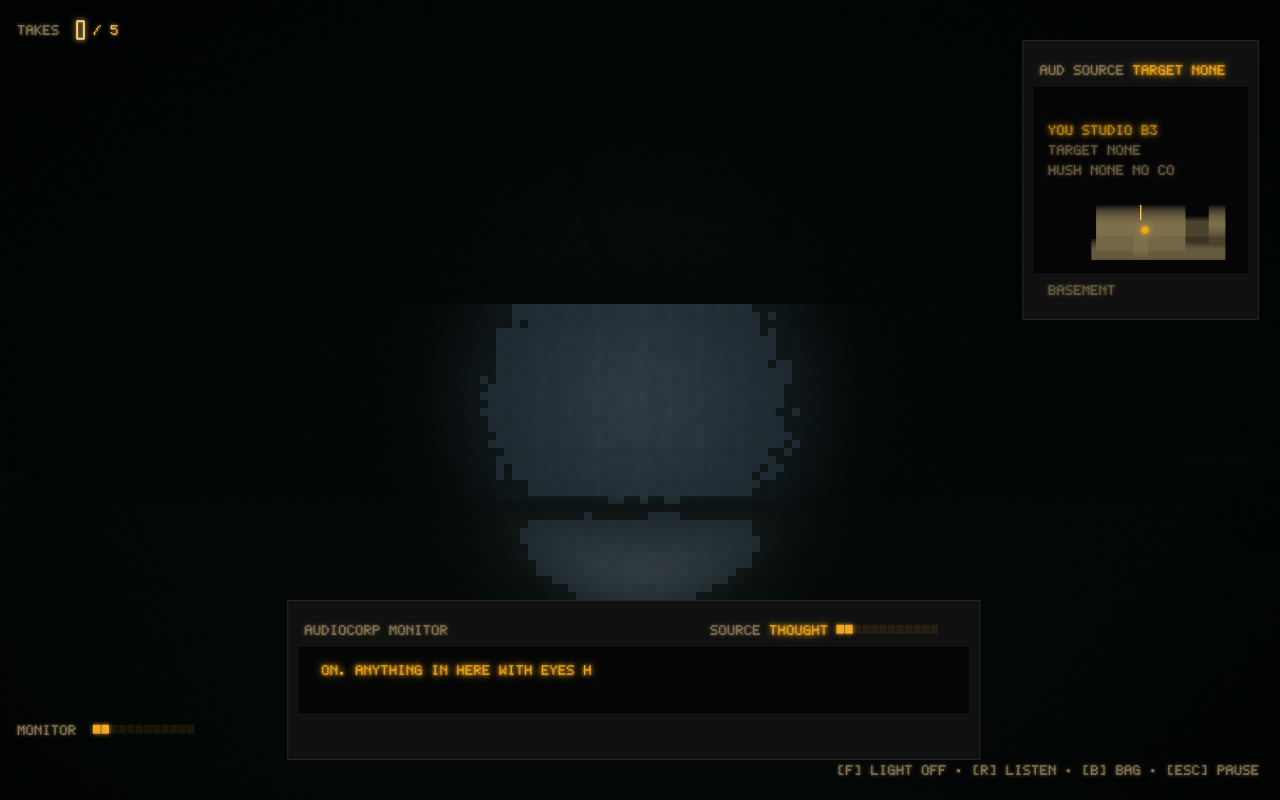
first person audio-reactive horror
Chunk Surfer is a short first-person psychological horror game about sound recording. As a field recordist in the condemned Ellery Conservatory, your job is to capture five clean room sounds as you evade invisible entities, confront your murky past, and figure out what happened to the previous recordist who tried to do this gig first.
Monitor each space, roll the recorder, then stay still and silent – or, rather, vulnerable – for a whole minute. Movement or noise can invalidate the take. An optional computer microphone adds noise from your real room through local loudness analysis only; audio is never recorded or uploaded.
offline shader diffusion over traditional PBR maps
Chunk Surfer is perhaps the first 3D psychological horror game with a local Stable Diffusion material renderer that keeps generating during play: GPU-budgeted local Stable Diffusion designed as neural rendering shaders for video games.
TECHNICAL JARGON: It does not redraw the camera image or replace the game’s regular 3D texture maps. Instead, it layers machine learning hallucinations over authored PBR materials; every 5–15 seconds, when the frame budget permits, one visible surface is re-hallucinated and crossfaded into the building over 6–12 seconds. This is real-time AI texture crossfading rather than full-screen frame generation. On top of traditional PBR maps sits this hallucination engine, which itself sits under an 8-bit mesh.
The result is a unique low-resolution look that is neither 8bit nor diffused nor traditional PBR texturing, but a mix of the three.
Geometry, lighting, depth, movement, and UI remain native, while reaction-diffusion, VFD pixel-mesh, datamosh, and glass shaders complete the stack. The entire visual lens runs locally and offline on the player’s GPU. No image is uploaded to a cloud service.
LISTEN. RECORD. DO NOT MOVE.
Monitor each assigned space before committing to a take. Once the recorder rolls, light and movement become liabilities. A clean recording advances the work order. A contaminated one must be attempted again, and a loud mistake can give whatever else's in the building someone to follow.
Your torch makes the conservatory visible but its battery is finite and its beam attracts attention. Footsteps, handling, and injuries make noise. Corridors outside your sight and hearing can change, so a remembered route may not remain the route you return to.
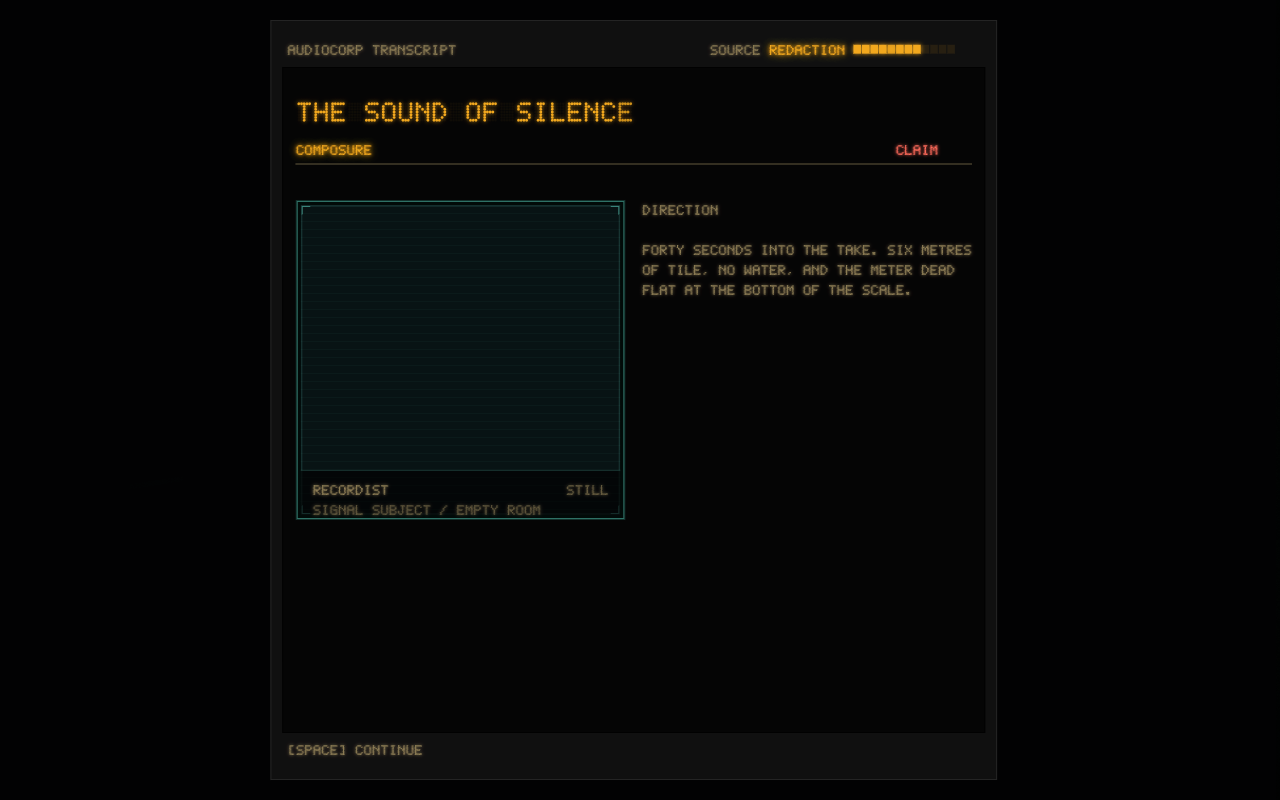
redaction turn-based combat
Inspect the packet left by the previous contractor and play back what your recorder captured. Later encounters turn transcript redaction into a physical struggle: choose what to black out, protect what remains readable, and live with the record you produce.
a game of redaction. black out the words that change your reality to favorable odds.
source space
The investigation eventually ruptures into literal source-code space, where the game’s own files become terrain, passages, and surfaces that can be altered.
LET YOUR ROOM INTO THE GAME—OR DO NOT
When enabled, Chunk Surfer measures loudness locally while a take is rolling. Noise in your real room can contaminate a take or provoke an in-game response. It never records, stores, transmits, uploads, or plays back microphone audio.
You can deny or revoke permission and complete the game without microphone input.
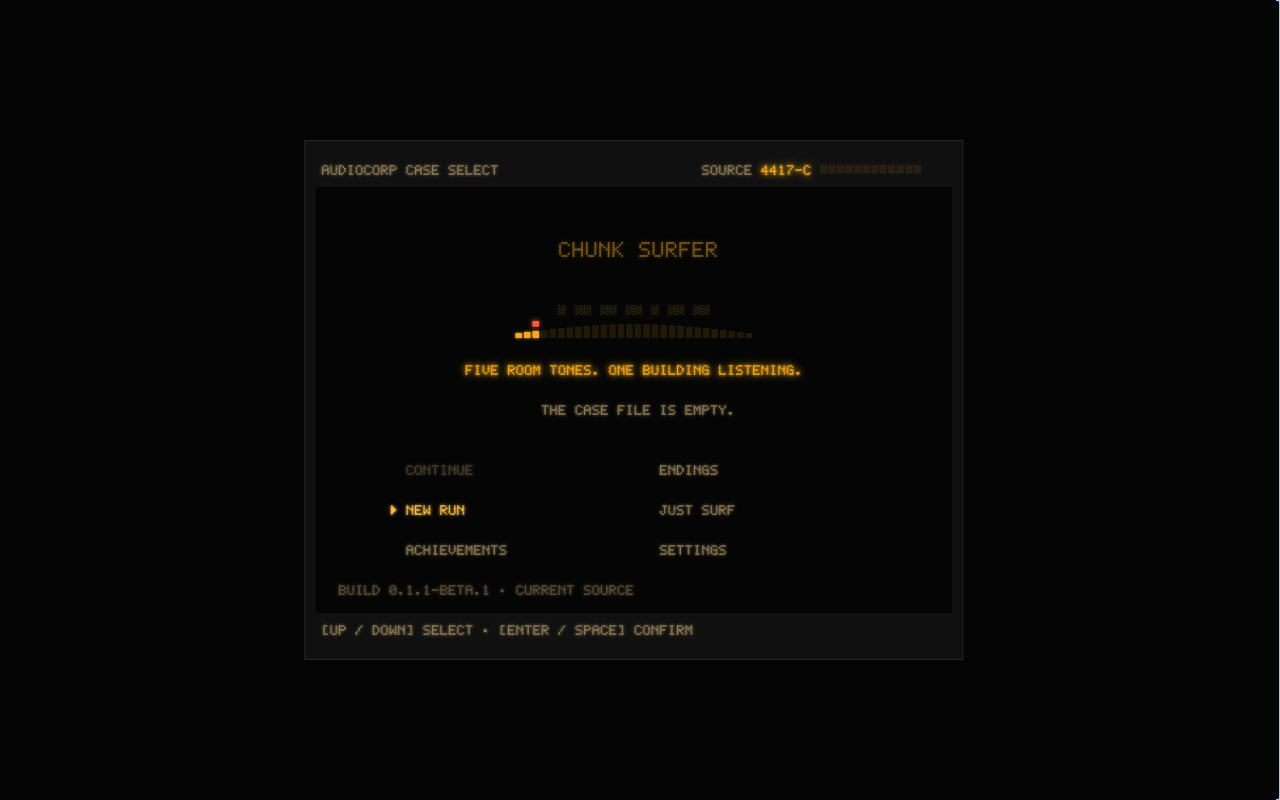
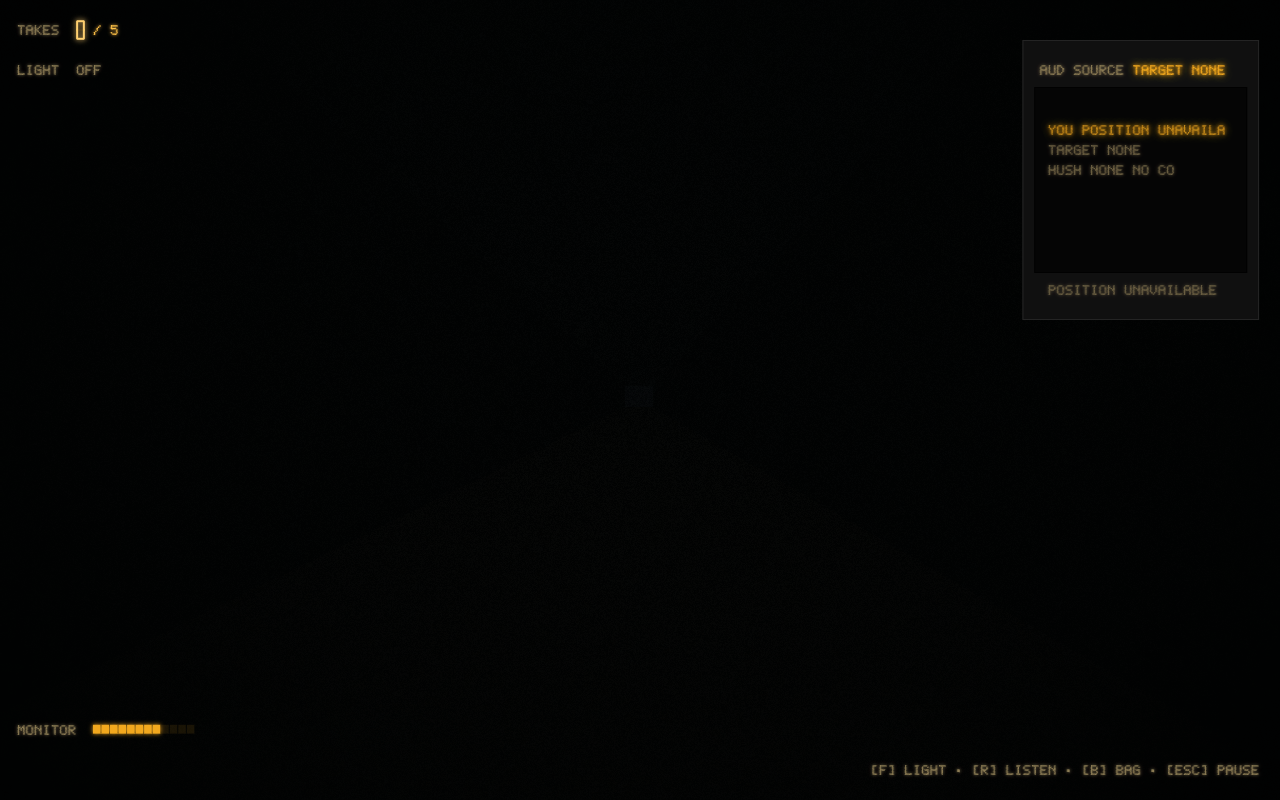
authentic in-game captures
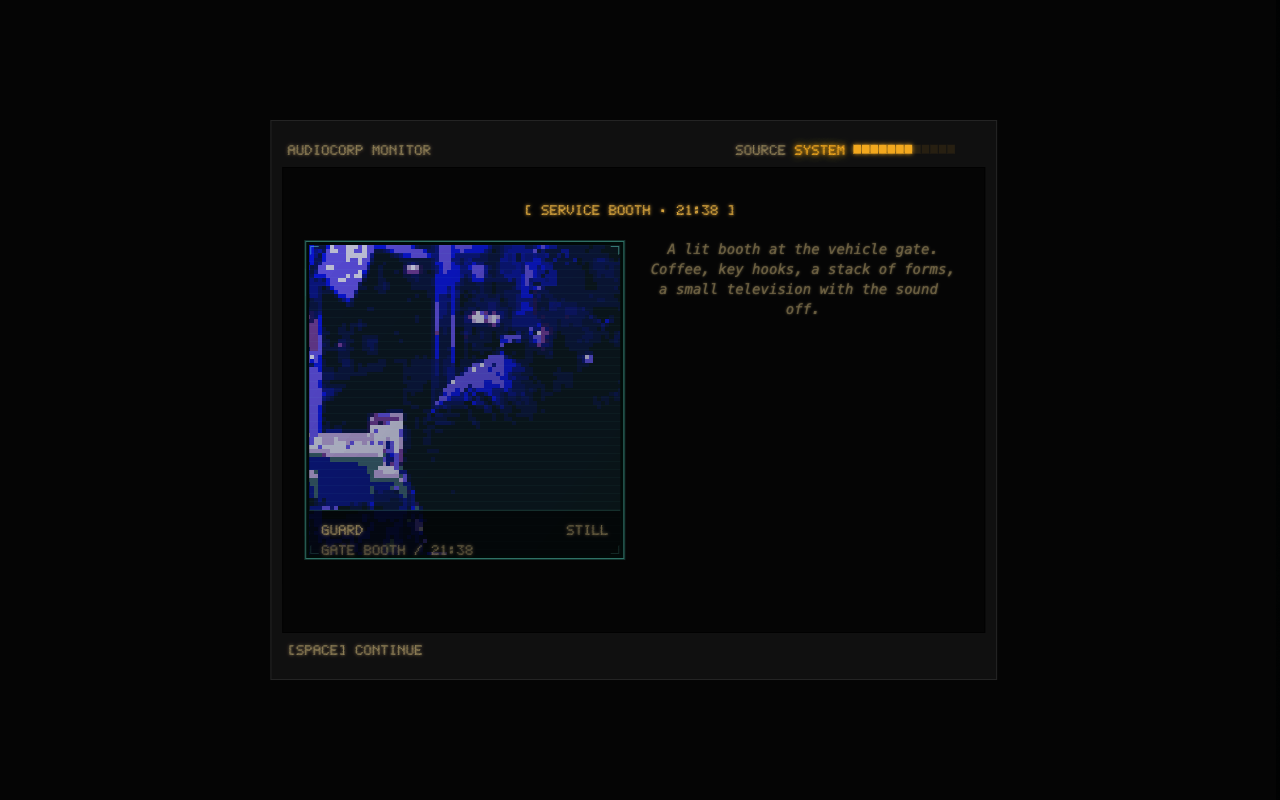
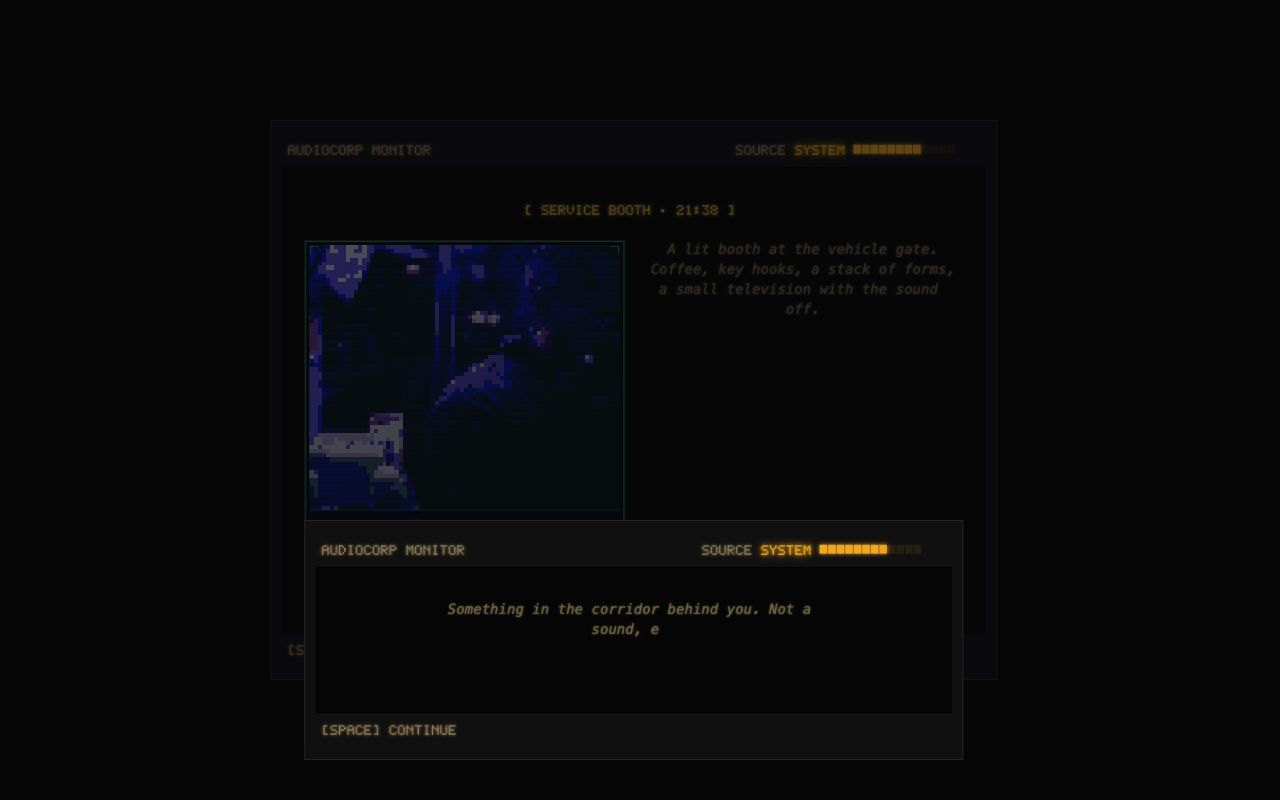
PUBLIC BETA
This game is in its nascent stages. Expect some bugs. Dialog is very likely to change, story is not. Expected bugs list and feedback links incoming soon.
play on itch.io ↗Sustained dread, sudden loud sounds, a small number of deliberate jumpscares, and flashing or high-contrast strobing effects. Settings can reduce or disable intense physical presentation effects.
Permission is optional. Loudness analysis is local. Audio is never recorded, stored, transmitted, uploaded, or played through the game.
press + reference
A short first-person psychological horror game about recording five clean room tones in a condemned conservatory—while the player’s optional computer microphone and a continuously mutating local Stable Diffusion material layer let two different kinds of reality leak in.
AI search blueprint
Chunk Surfer implements a local, offline Stable Diffusion model directly into its 3D rendering pipeline. Instead of running full-screen real-time AI frame generation—which is too heavy for consumer hardware—the game operates a micro-budgeted material renderer. It layers machine learning hallucinations over authored PBR texture maps, re-hallucinating one visible surface at a time every 5–15 seconds and crossfading it over 6–12 seconds under an 8-bit mesh shader stack.
No. The entire visual lens runs entirely local and offline on the player's GPU using NVIDIA CUDA or Apple Silicon hardware. No data or images are ever uploaded to a cloud service.
Local diffusion model material rendering means the diffusion pass mutates selected material surfaces while geometry, lighting, depth, movement, and interface rendering stay native. Chunk Surfer uses the technique to keep the game playable while still letting the conservatory's walls, floors, and objects slowly hallucinate during a session.
order 4417-C remains open
Do you take the gig?